Understanding light, without being an engineer.
On a data sheet, light comes down to acronyms and figures: lumens, lux, kelvin, CRI. You read them, you hesitate, and you often end up choosing from the photo.
Here are the eight words that matter, explained simply, as I do on site with my clients.
How much light
The lumen measures how much light a lamp sends out, in every direction. It is the flow from the tap.
More is not better. On a painting, a well-framed spotlight of a few hundred lumens is enough. In the garden, it is often enough to reveal a tree. The rest is light that ends up on the walls, in the sky or in your eyes.
What actually arrives
The lux measures the light that reaches a surface: the table, the step, the foliage. If the lumen is the flow from the tap, the lux is the water that falls into the glass. One lux is one lumen spread over one square metre.
The same lamp gives a lot of lux up close, and very little from afar. So it is not the lamp that matters, it is where it goes. That is where my work begins.
The colour of light
Kelvin tells you whether a light is warm or cool. The lower the number, the more golden it is; the higher it is, the bluer.
At home and in the garden, I almost always stay between 2,200 and 3,000 K. A warm light is also gentler on insects and night birds. And I never mix two colour temperatures within a single view: the eye sees it at once.
True colours
The colour rendering index, or CRI, tells you whether a light shows colours as they really are. It runs from 0 to 100; sunlight scores 100.
Below 80, I don't install it. For a home, a restaurant or a garden, I look for 90 or more; for works of art, 95 and above. And I check the R9: it tells you whether reds, skin tones and flowers keep their warmth.
Where the light goes
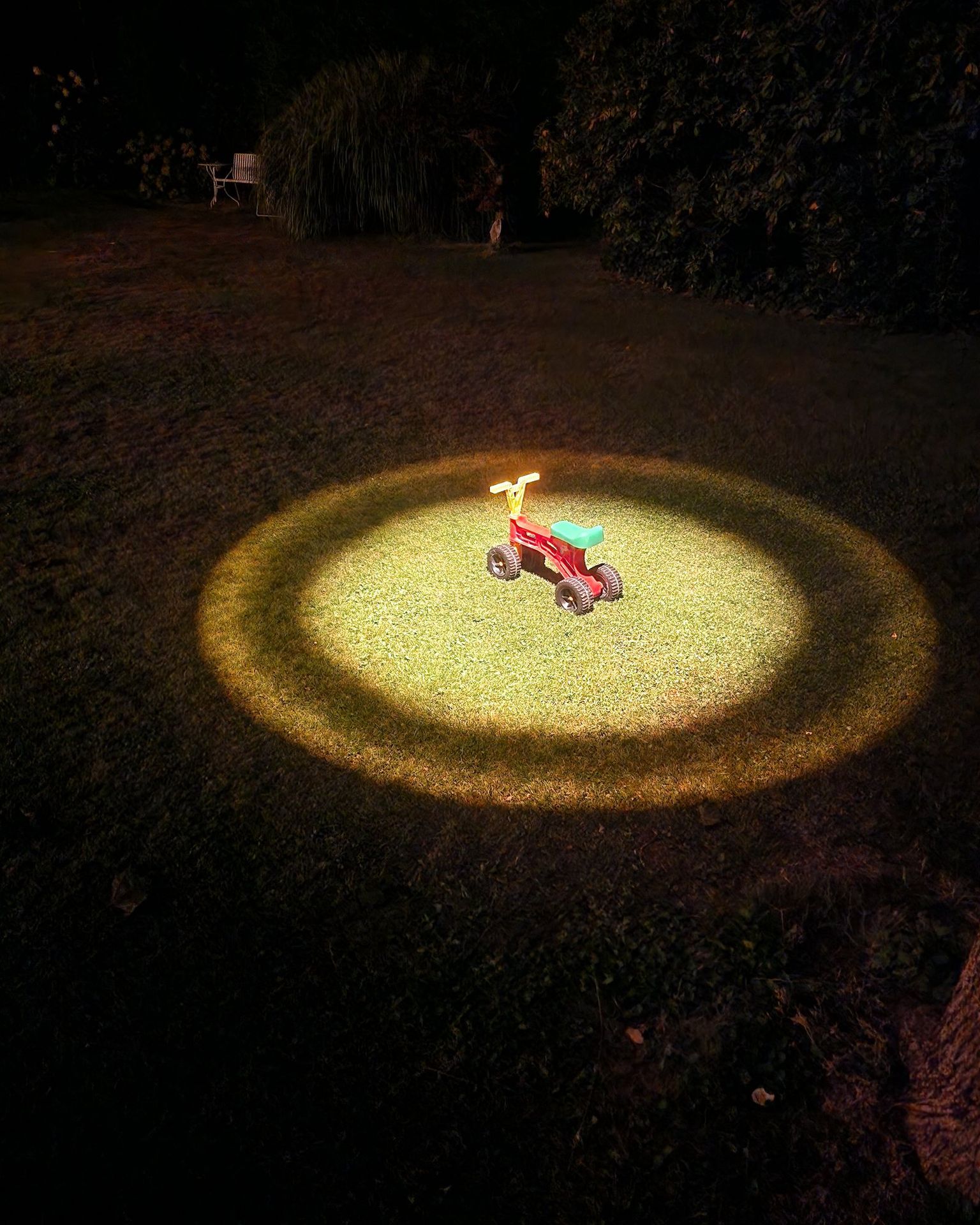
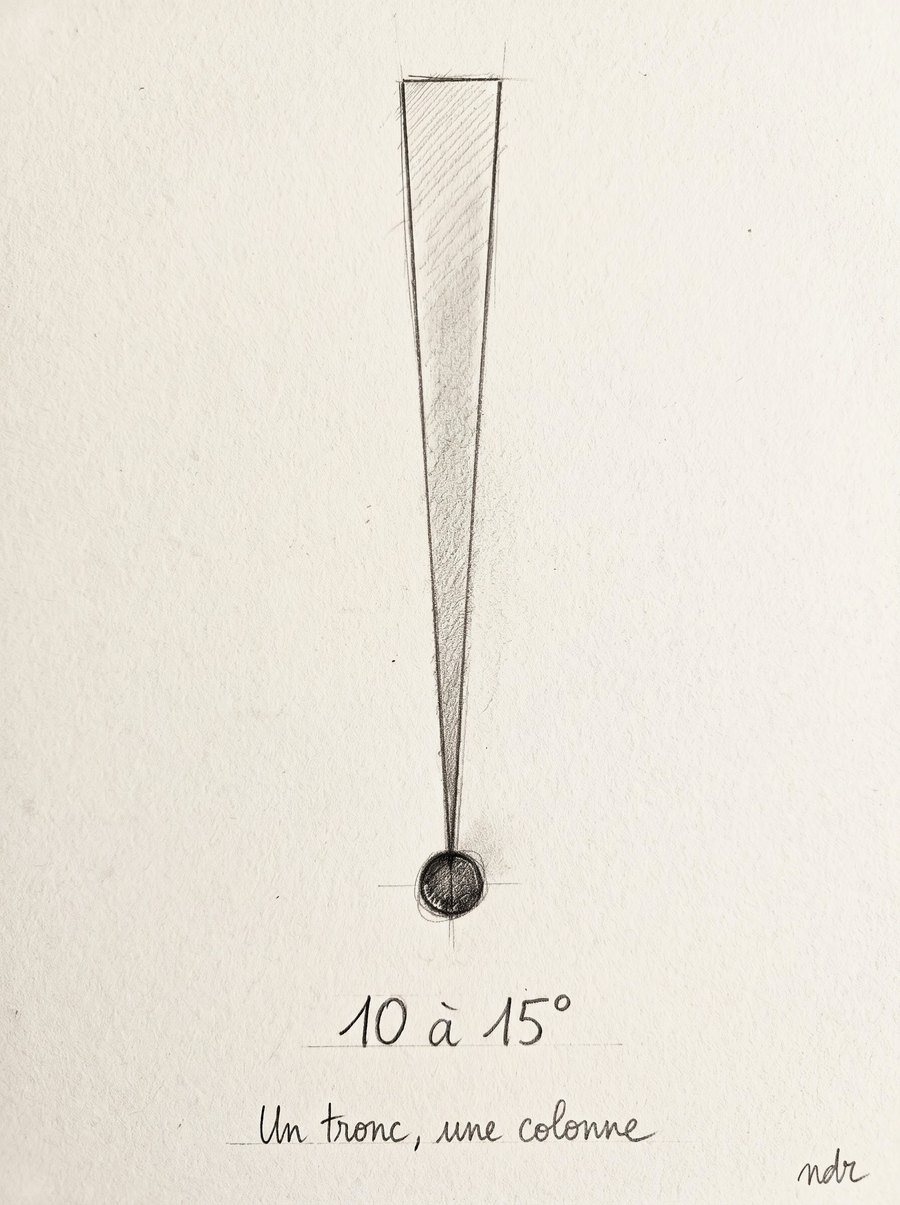
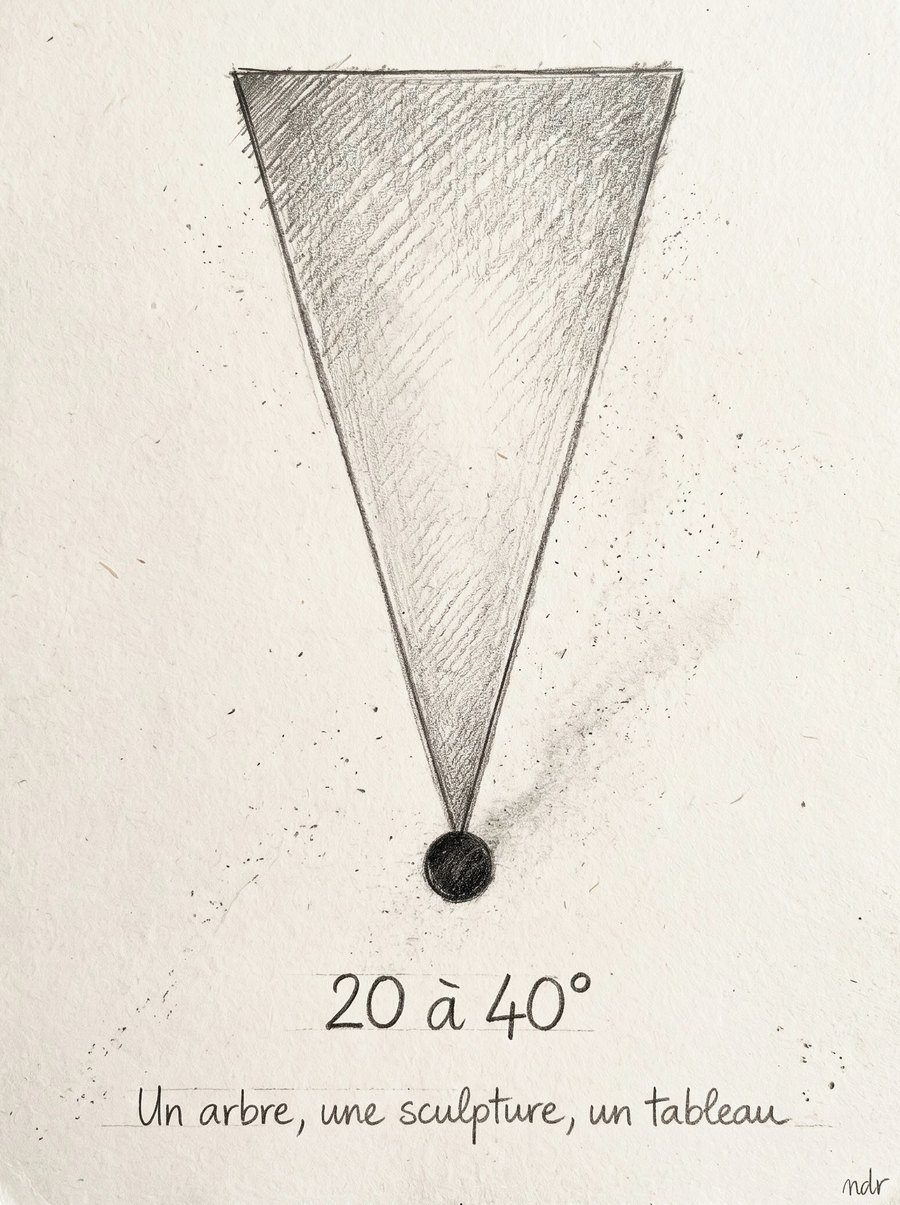
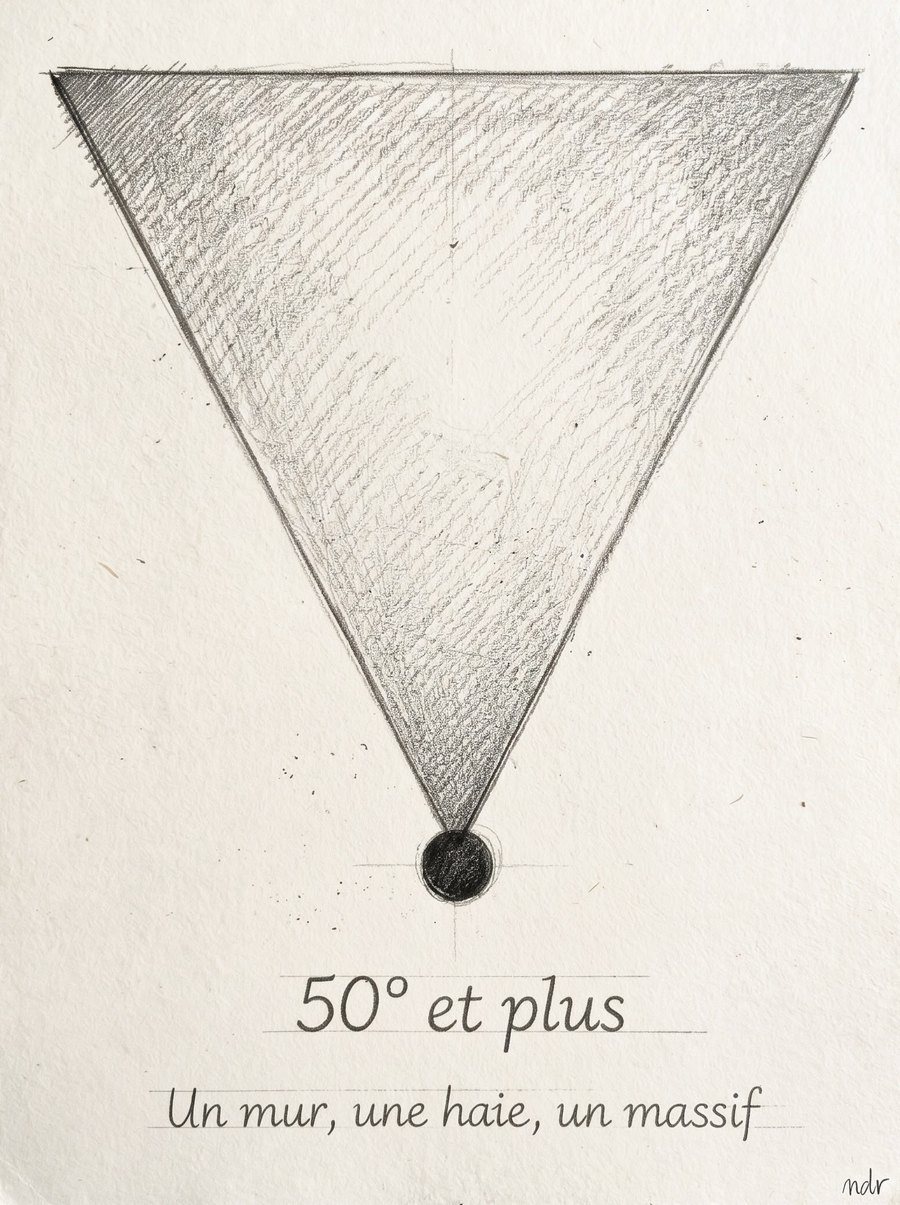
The beam angle, in degrees, tells you whether the light comes out as a fine brushstroke or a wide fan. It is the rose on the watering can.
I choose the angle according to what I want to show, and only then the power. One simple rule: you should see the light, never the lamp. A good beam does not dazzle you when you sit down at the table.
The quiet heart of the LED
An LED cannot be connected straight to 230 volts. Between the two sits the driver: a small electronic box that gives it exactly the current it needs.
I always ask which driver is used, and whether it can be replaced. A fitting whose driver is sealed in resin is thrown away at the first fault. That is why my brass fittings open up: you change the part, you keep the fitting.
Light that follows the evening
Control means deciding when the light comes on, how bright it is, and in what order. From a simple wall dimmer to a whole house set from your phone.
Control is planned from the first drawings, not afterwards. And it must stay simple: if you need a manual to switch on your terrace, the project is badly designed. The finest setting is often to dim.
The material that lasts
Brass is an alloy of copper and zinc, most often two-thirds copper to one-third zinc. The Romans already struck coins from it; in the 19th century it was found on ships, instruments, taps, gas lamps and then the first electric lamps.
Beware of “brass finish”: a thin layer of colour over another metal. I work in solid brass. It costs more on the first day, and much less over thirty years. It ages with the garden, and it can be repaired.
These words will help you read a data sheet. But you don't have to remember them: that is my job.
Leave the light to me. All you will have left to do is enjoy it.
Every project begins with a conversation. Let's talk.